Elm Bark Craft Awaits

Begin Here

Once, basketry knowledge traveled only through patient demonstration beside the tree itself. Now, guided tutorials bring that same careful instruction to makers everywhere.
Explore Steps
Understanding Elm Bark Properties and Essential Preparation

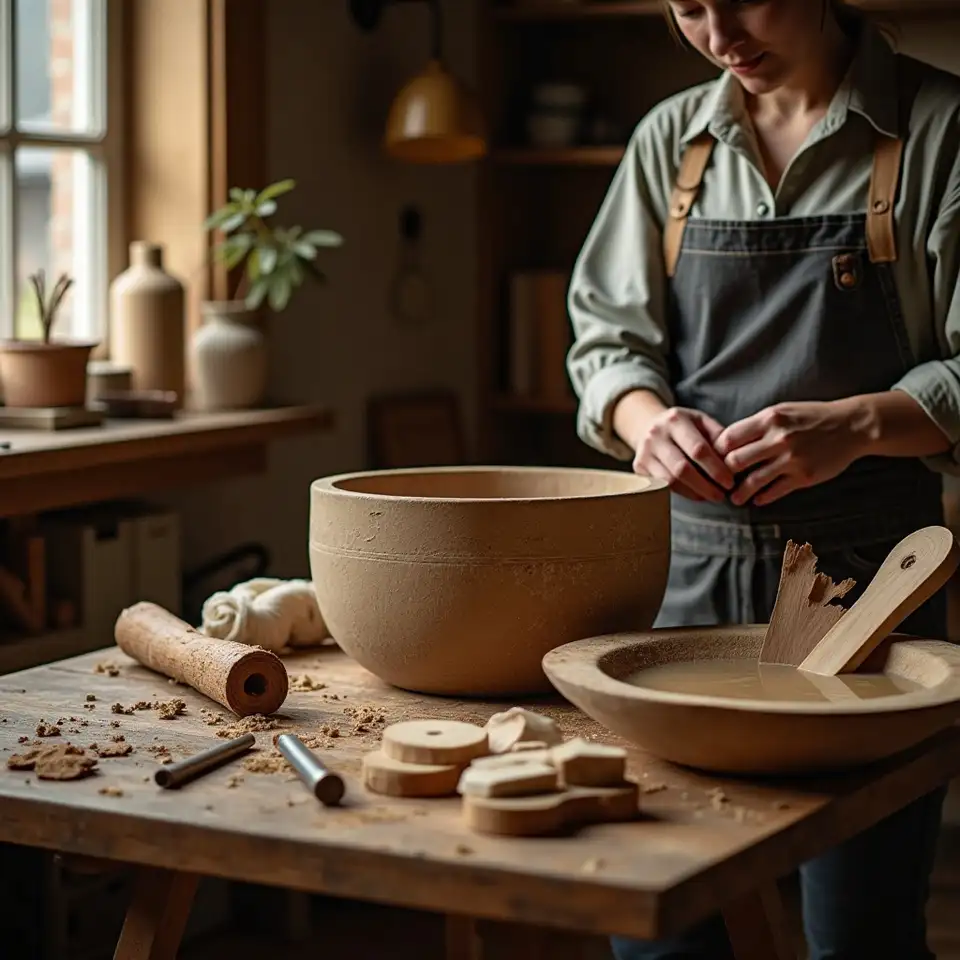
Slippery elm bark behaves unlike any common craft material. It stiffens when dry, softens when soaked, and carries grain lines that resist folding across their direction. Seasonal timing matters: harvest too early and the bark tears; too late and it adheres stubbornly to the wood beneath. A prepared maker studies these properties before lifting the first strip from the forest floor, understanding that patience in preparation determines success in construction. The essential toolkit remains deliberately modest. A sharp, thin-bladed knife separates bark from wood; a simple awl pierces stitching holes; a basin of clean water restores pliability to dried sheets. Weights or heavy books flatten prepared bark overnight, and sandpaper smooths rough edges before folding begins. Workspace preparation demands little beyond a sturdy table, good natural light, and the willingness to accept that the first attempts will teach more than they impress.
View Resources
Beginner workspace with soaking elm bark strips and simple hand tools
Start Simple

New Makers This Season

Over Two Hundred Growing Fast
Community Enrolled

Crafting Your First Elm Bark Basket

A deliberate sequence that transforms raw bark into a functional vessel through patient, mindful handwork

Wisdom from Experienced Makers

Preventing Bark Cracks

Never force dry bark to fold. If resistance appears, return the material to water briefly. Cracks usually signal insufficient moisture or folding against the grain.

Storing Prepared Bark

Keep bark strips flat, cool, and slightly humid between projects. Wrap in damp cloth inside breathable containers, checking regularly to prevent mould.

Achieving Even Weaves

Consistency comes from uniform strip width and matching tension. Measure carefully, pull each stitch with equal pressure, and step back frequently to assess overall symmetry.

Creative Form Variations

Once the basic folded-corner vessel is mastered, experiment with oval bases, taller cylindrical walls, or integrated handles. Each variation teaches new material behavior.

Finishing Treatments

Some makers apply diluted beeswax for subtle sheen and moisture resistance. Others prefer the natural matte surface that develops through handling alone.

Common Questions

Where can elm bark be sourced ethically?

Seek permission on private land or contact local forestry authorities about permitted collection areas. Never strip bark from public trees without authorization, and always prioritize tree health by taking narrow strips from mature specimens during the proper season.

How difficult is the first basket project?

The folded-corner berry basket suits determined beginners. Expect imperfect results; the first vessel teaches material behavior more than it displays mastery. Most makers produce satisfying work by their third attempt.

What season is best for harvesting bark?

Late spring through early summer, when rising sap loosens the cambium layer. The bark should separate with gentle pressure; if it resists or tears raggedly, the timing is premature or too late.

What finishing treatments protect the basket?

Seasoning in dry air hardens and preserves the form naturally. Optional beeswax or linseed oil applications offer mild moisture resistance, though traditional baskets were often left untreated and replaced as needed.

Can household tools substitute for specialized equipment?

A sharp kitchen knife and sturdy sewing needle can suffice for initial projects. Dedicated craft knives and awls improve precision as skill develops, but elaborate tools are never required to begin.

How long does a finished basket last?

With proper care and dry storage, elm bark baskets endure for many years. Regular handling develops a polished surface, while prolonged dampness risks mould and decomposition.